- Me
- Direction and prompts.
- Opus 5.5
- Anthropic, in Claude Code. The layout, terrain, hall and camera, and every render.
- gpt-6.1-sol
- OpenAI, in Codex. The skyline, facade, cliffs, waterfall and throne.
- gpt-6-astra
- OpenAI, in Codex. The first two garden passes.
It started inside
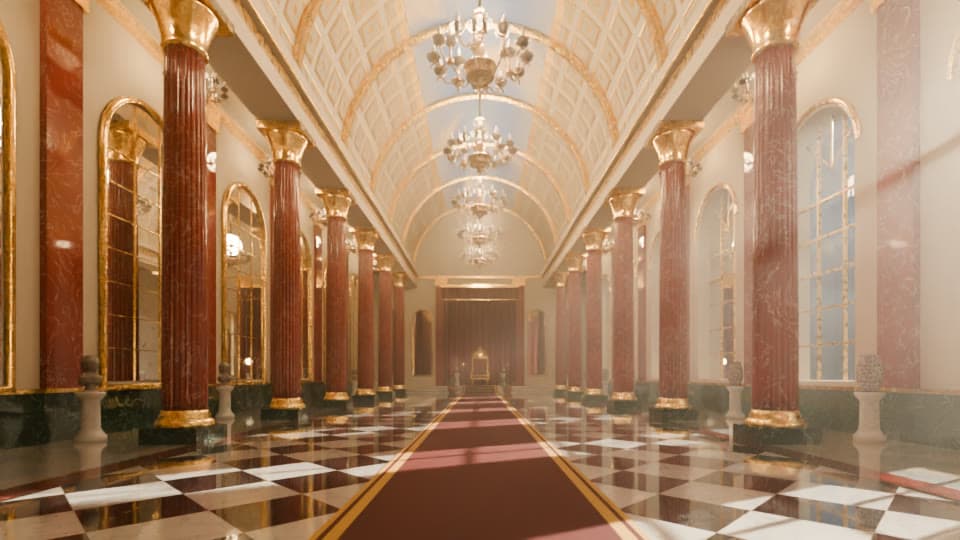
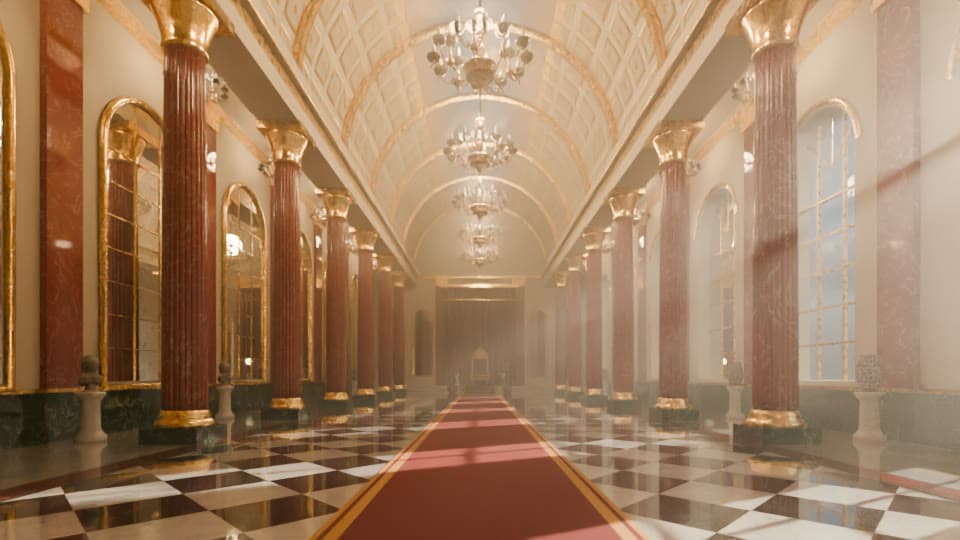
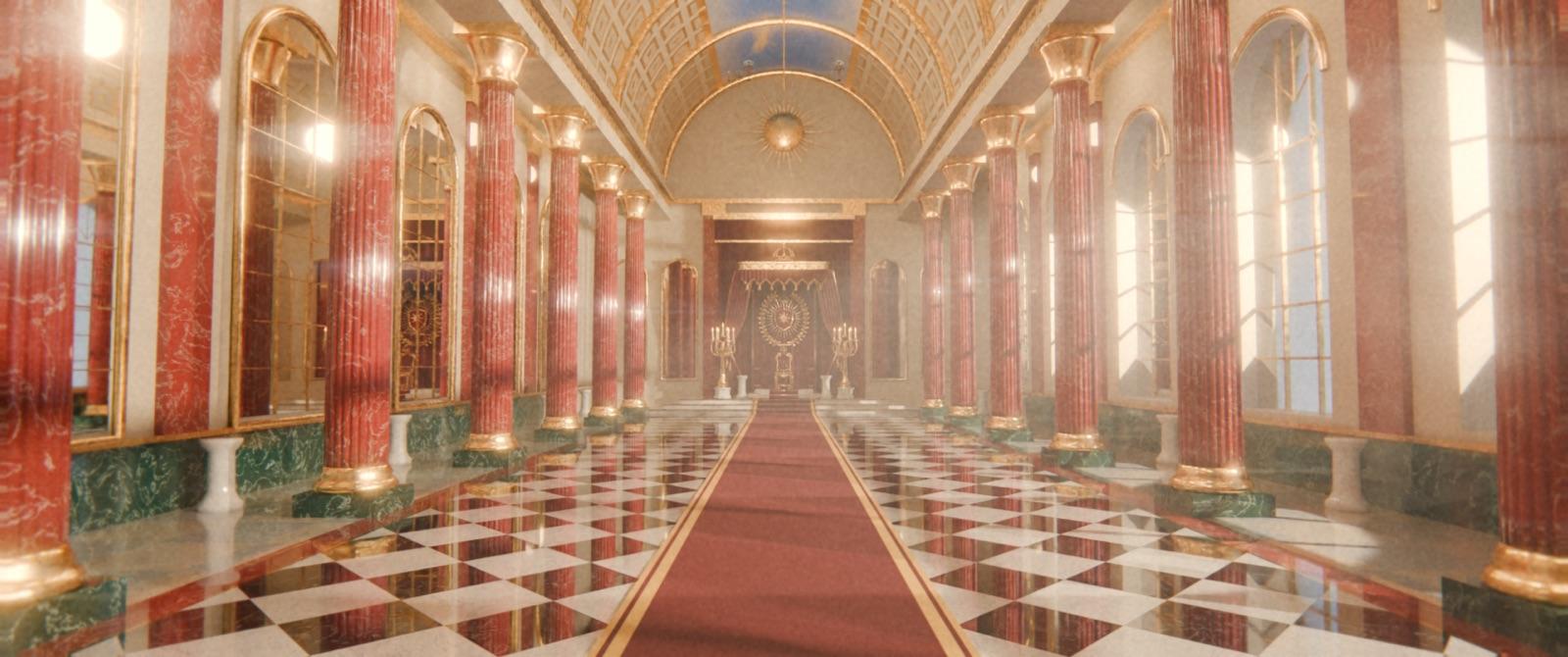
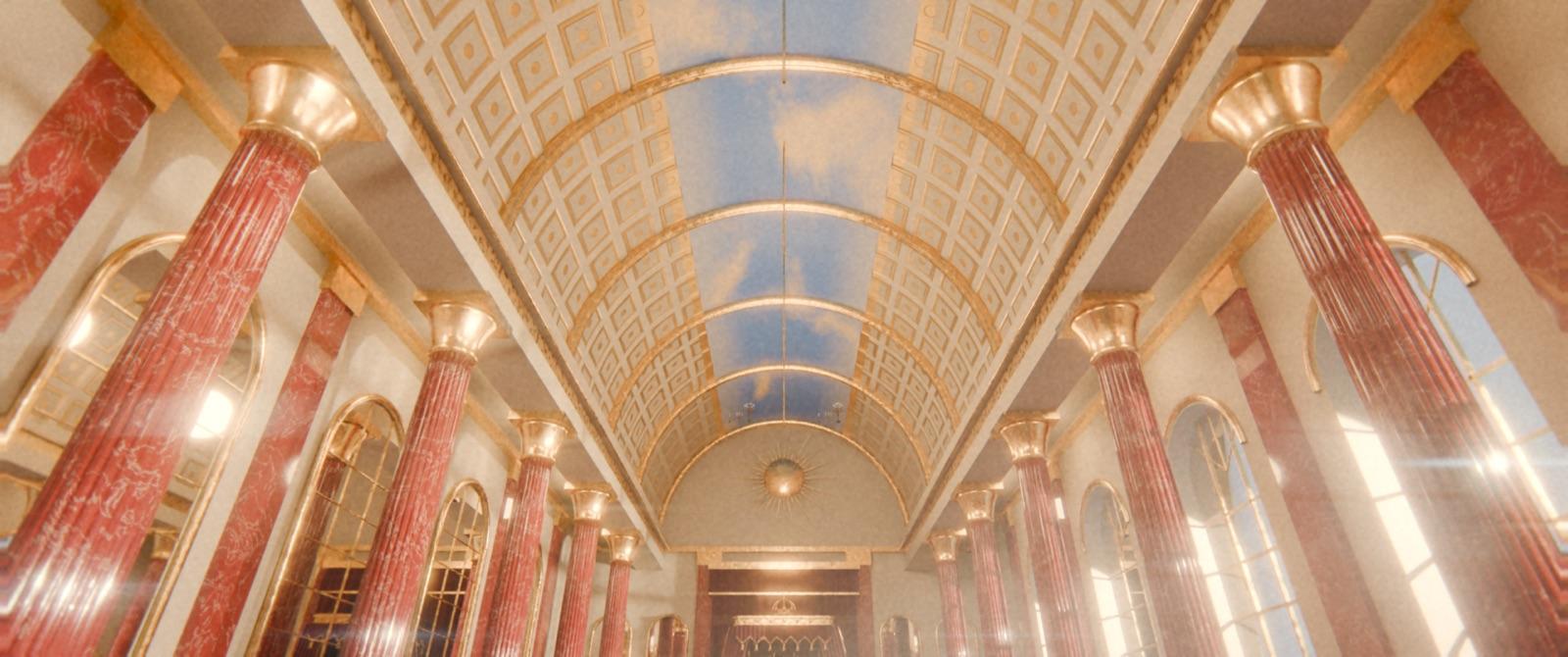
I asked for a grand palace interior with marble floors. Opus 5.5 built a gallery in the spirit of the Hall of Mirrors at Versailles: a diamond marble floor, red marble columns with gilded tops, a coffered ceiling, crystal chandeliers and a crimson carpet up to a throne. It went through five drafts in about five minutes, each a seven-second render at half resolution. It flagged its own problems too: the carpet looked pink in the sun, and the throne was too small to see from the far end.
Then the outside, in five drafts
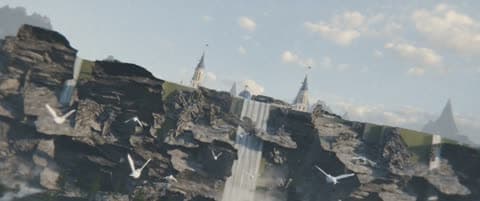
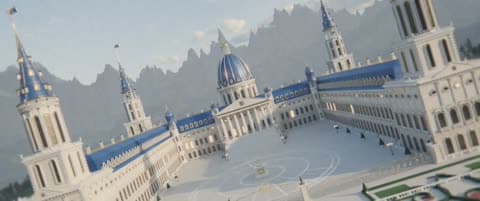
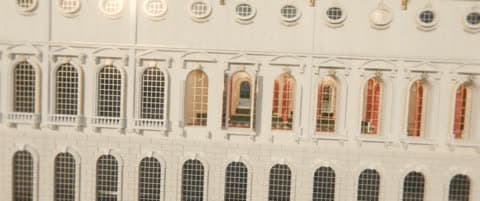
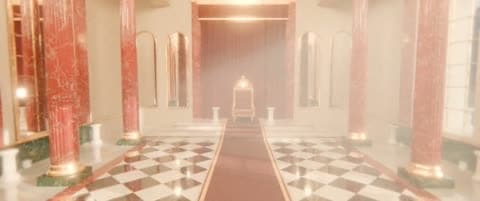
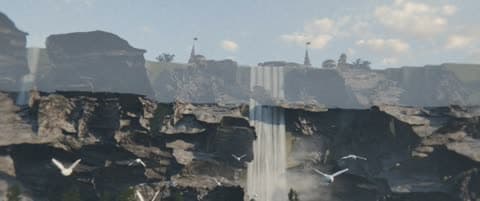
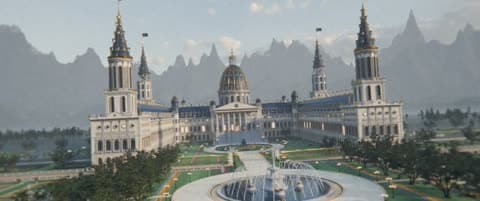
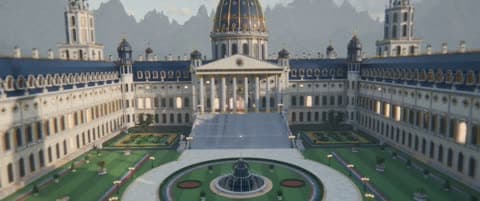
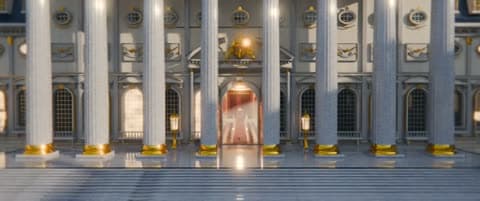
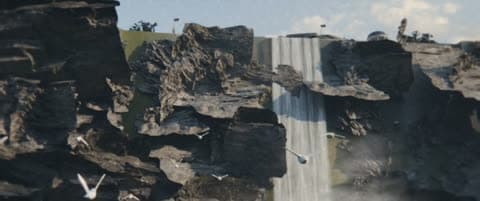
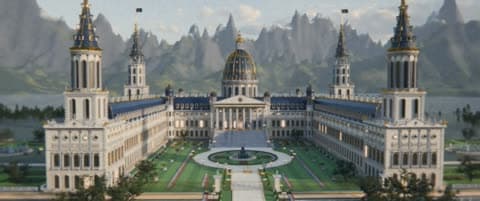
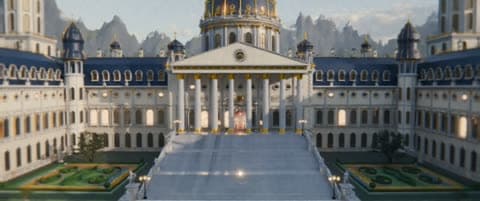
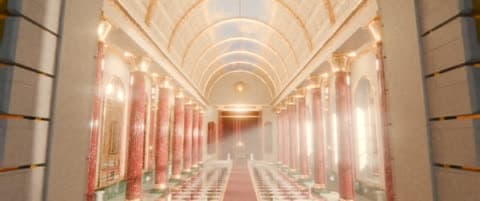
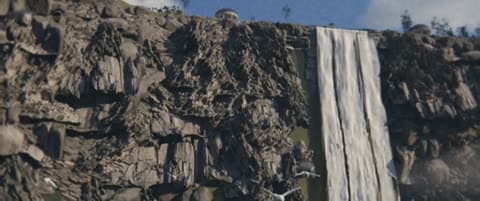
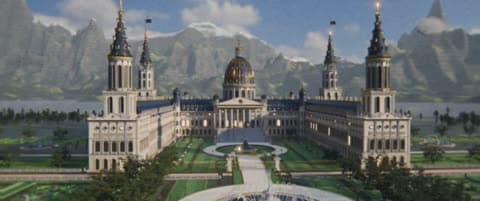
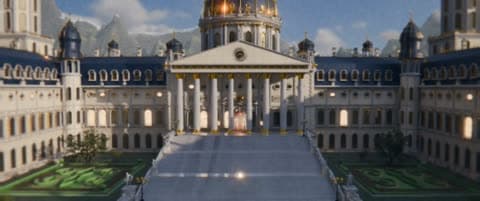
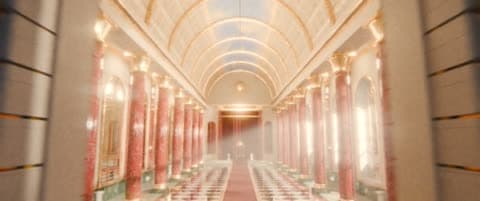
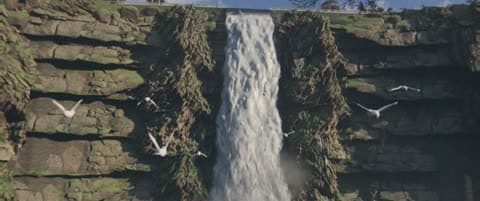
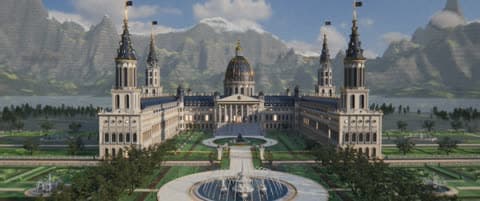
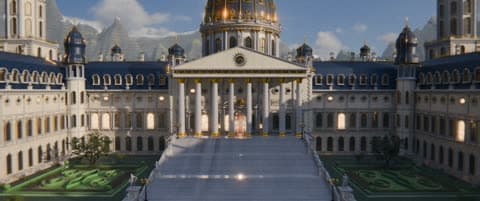
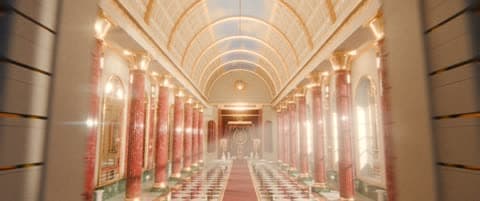
Draft 1: A bare first pass
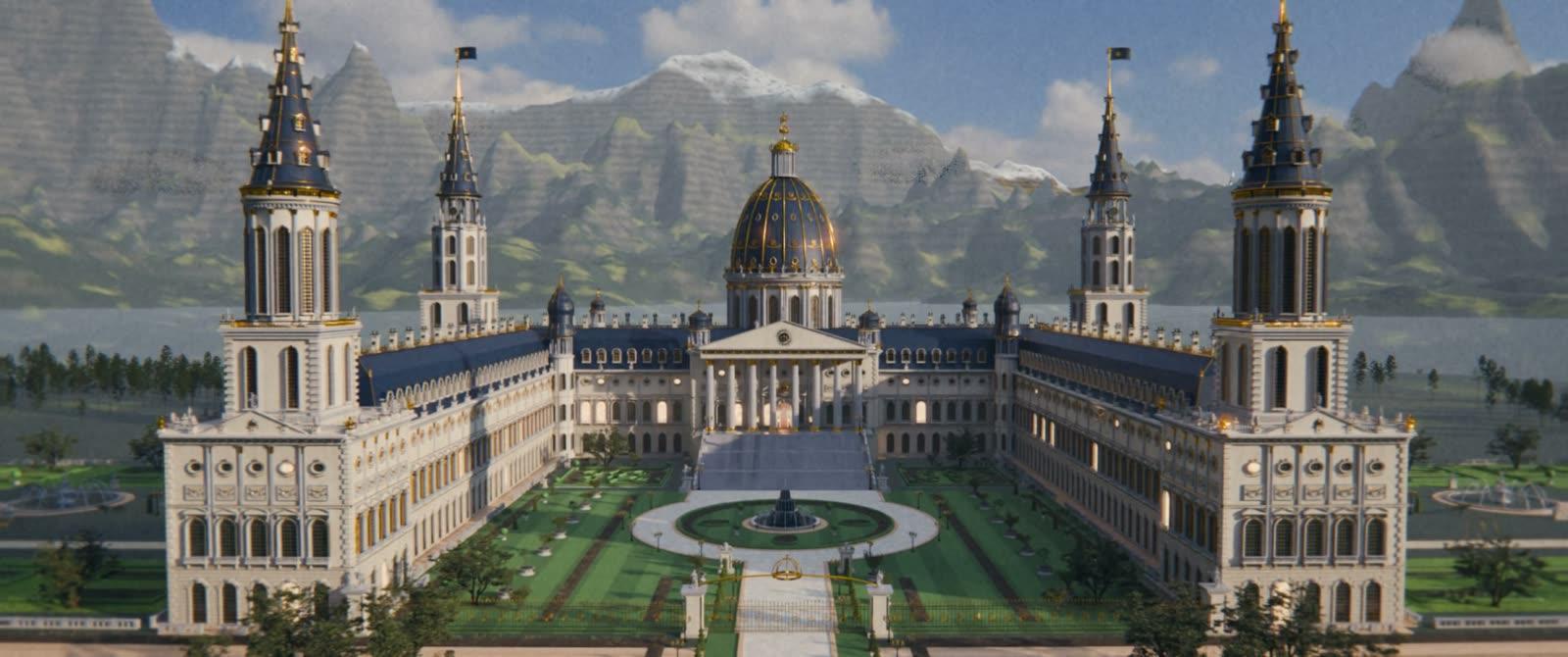
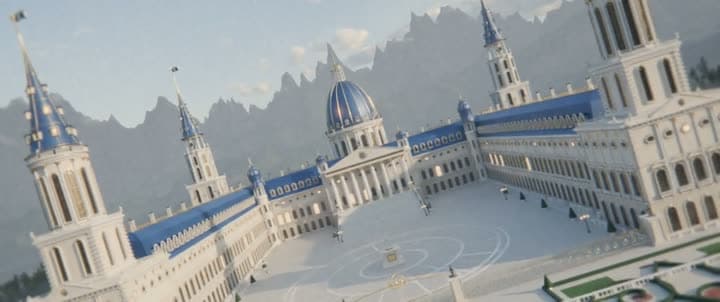
Then I asked for the outside: a palace on the scale of the ones in manhwa, with a camera that flies in through the building. Opus 5.5 started with
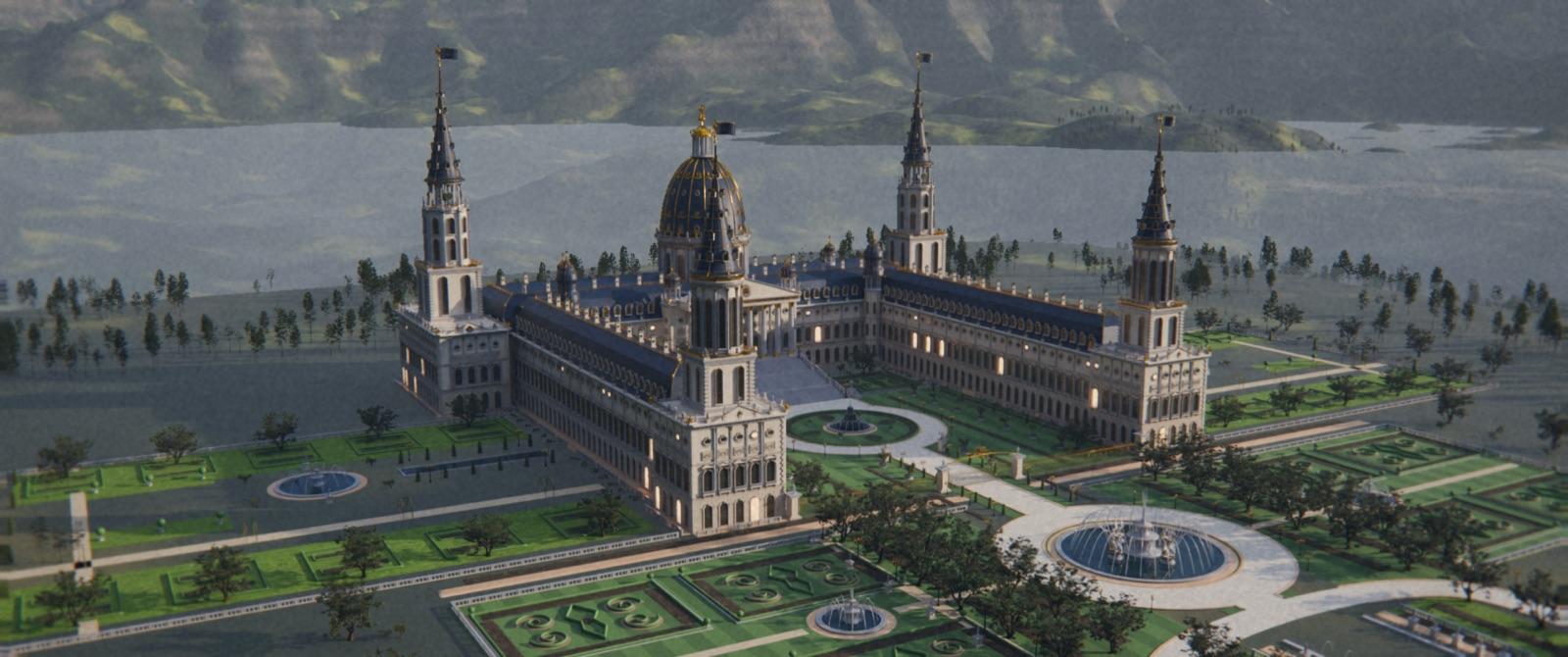
layout.py, one file holding every measurement: 300 m across the front on a 6 m bay grid, 757 window bays, towers 168 m tall beside a 140 m dome, and 160 m of cliff with the waterfall pouring off it into the lake. The Codex sessions built to those numbers without ever seeing the scene. Three of them, two on gpt-6.1-sol and one on gpt-6-astra, did the skyline, the facade and the grounds while Opus 5.5 did the terrain, the cliff, the lake and the camera. The palace came out white on bare paving, the garden was mostly flat green, and the camera flew like a bird, wobble and all.Draft 3: A garden, music, and homework
I asked for more detail, a proper garden, better music and a steadier camera, and for Opus 5.5 to learn from Blender tutorials first. The hall moved into the centre block, under the dome. gpt-6-astra rebuilt the grounds, and the music became Scott Buckley's Titan, cut so its first swell lands on the reveal at 12 seconds. Opus 5.5 pulled transcripts from Blender Guru, Jamie Dunbar, Critical Giants, CG Boost and Polyfjord and wrote down what to copy: a sky matched to its sun, fog that sits low and clears higher up, grime rising from the ground, people-sized details for scale, and wide 20 to 24 mm lenses.
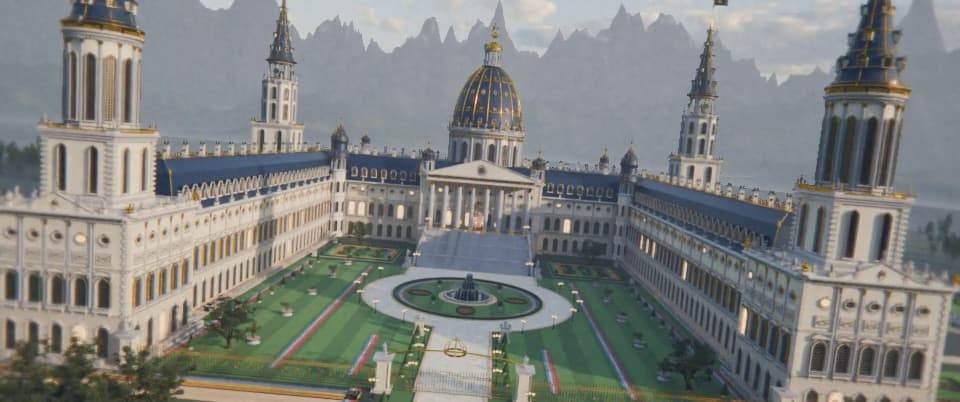
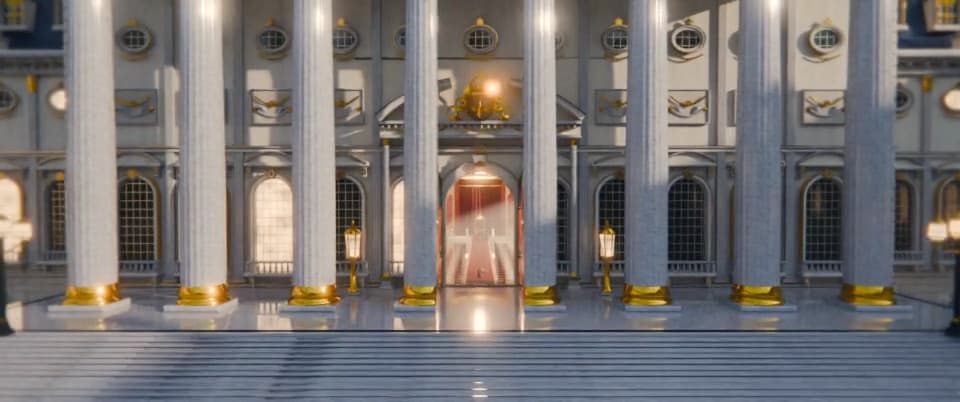
Draft 4: Smoothing the flight
The camera was still jerky. Opus 5.5 rebuilt it as one spline through a set of points, resampled so it moves at an even speed, with its aim smoothed over about a second either side and its bank held under 5°. That got rid of the bird wobble.
Draft 3Draft 4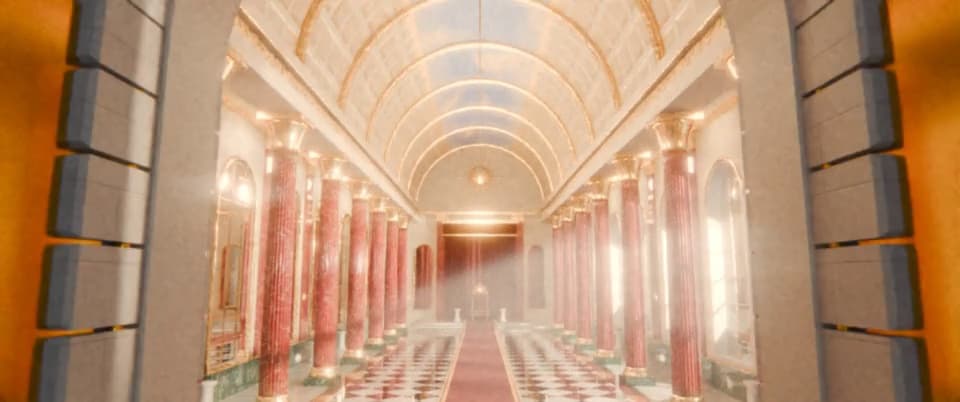
The hall still renders far too bright. Draft 5: Real mountains
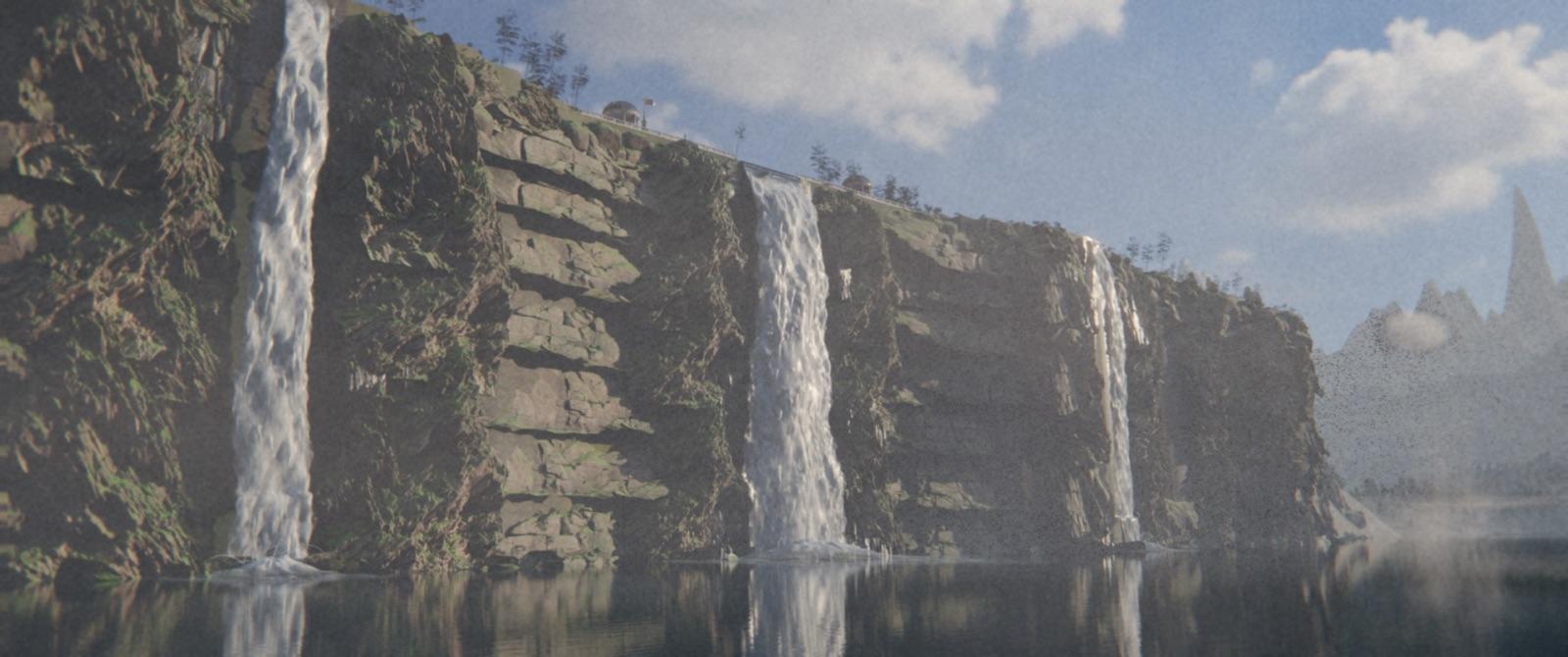
I asked for real mountains, rocks, haze and lens effects, and for library assets over anything generated. The mountains are now the real Eiger, Mönch and Jungfrau, built from elevation data and turned so their north faces look at the palace, the Eiger about 9.5 km away. gpt-6.1-sol, in Codex, wrote the cliffs, the waterfall and the clouds. The cliffs broke the render first: every wet rock had its own material override, so Cycles copied the geometry 4,746 times and ran out of memory. Opus 5.5 made the wet rocks share one mesh. The garden had the same problem in another form: 190,000 flowers took 13 seconds a frame just to load, so about a fifth of them stayed and the beds' colour does the rest.
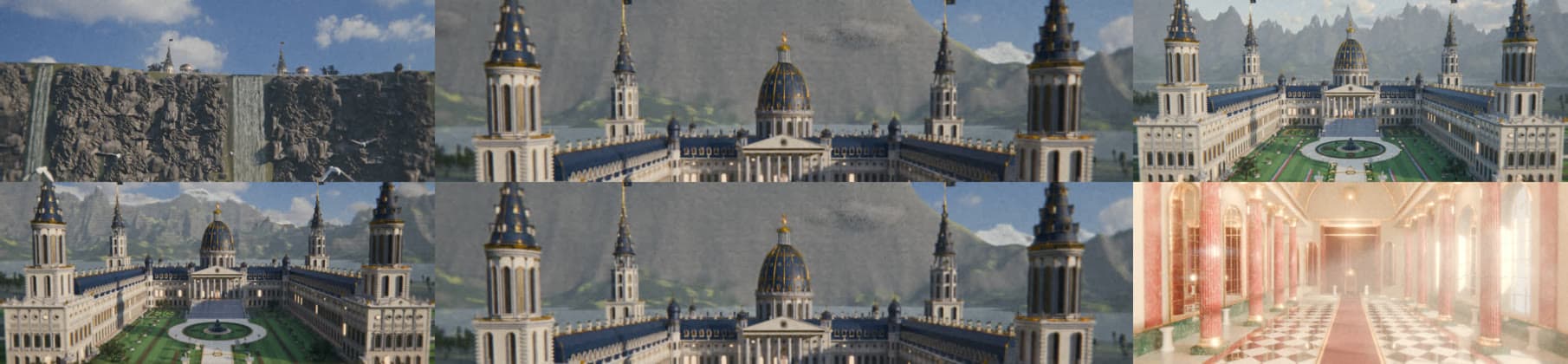
Final, draft 6: The waterfall and the throne
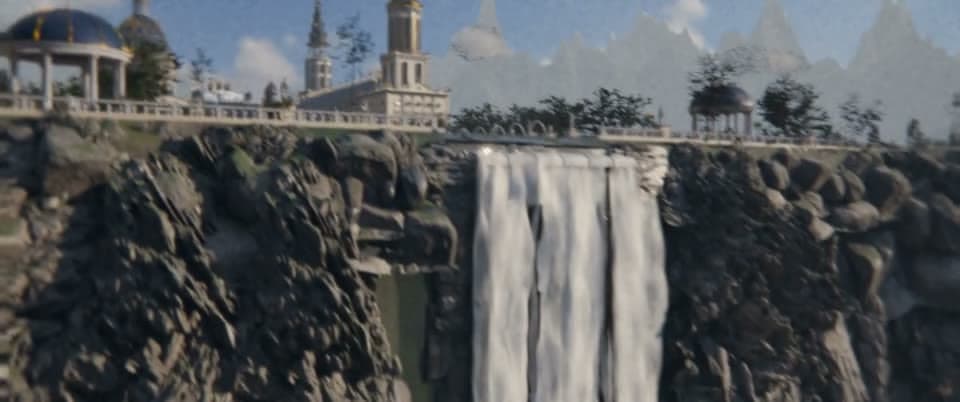
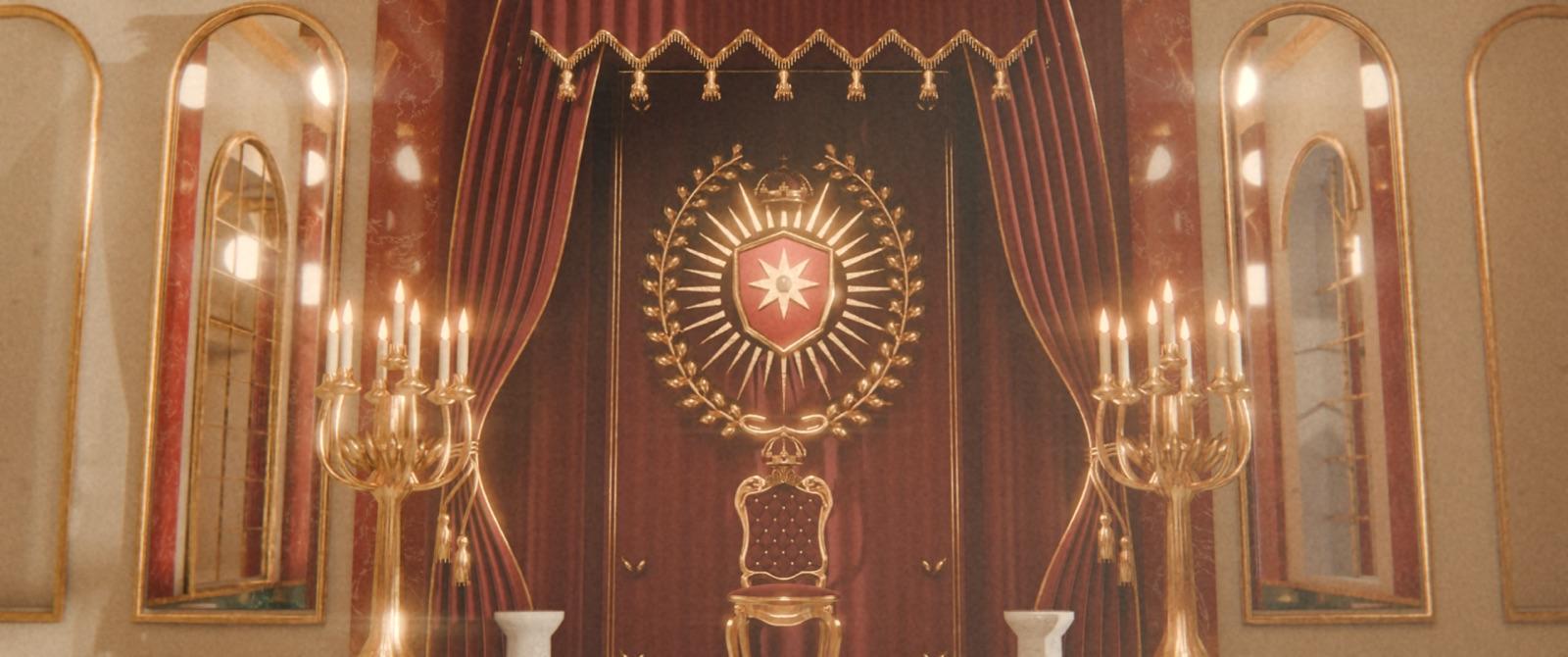
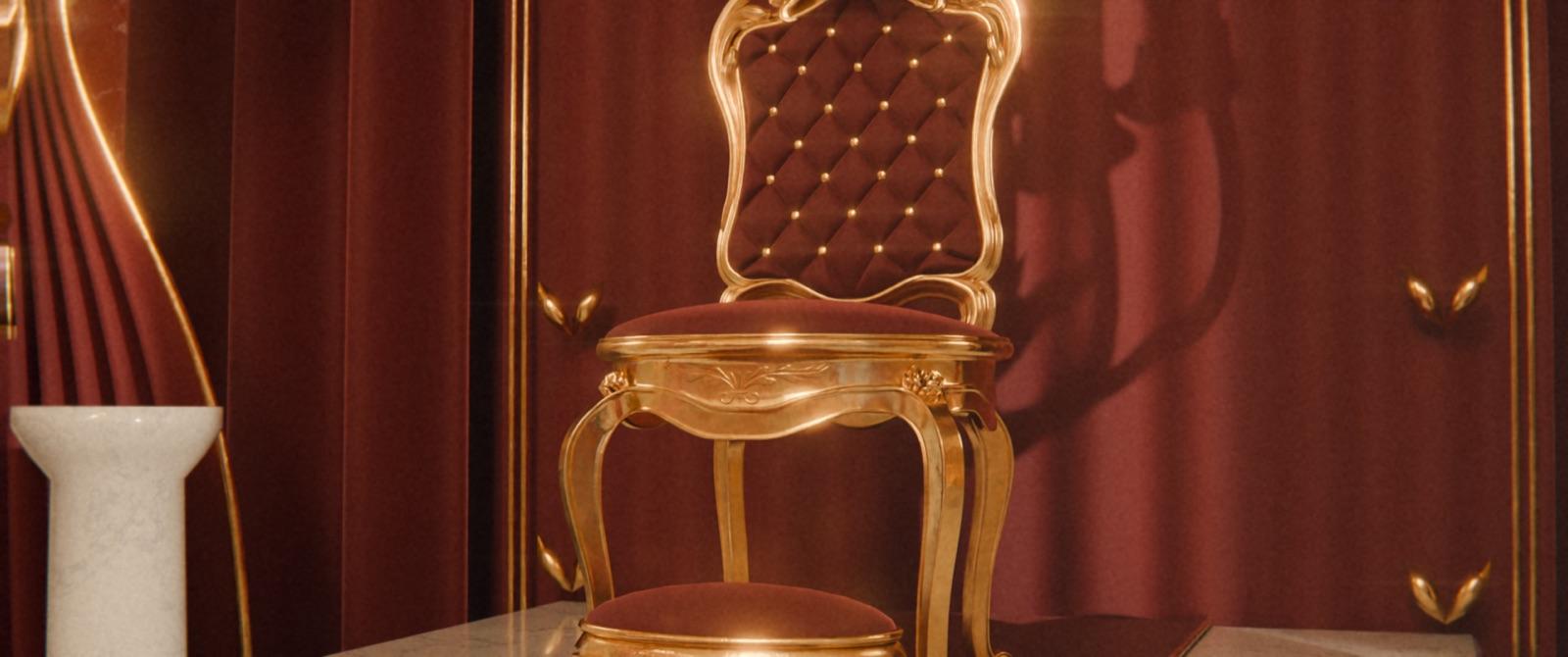
Codex took the waterfall, which Opus 5.5 said had to stop looking like white planks. The camera now comes in low over the lake and rises straight up the fall. The throne is built around a carved Baroque chair from BlenderKit, with a canopy, a crown and velvet curtains added by gpt-6.1-sol. The hall rendered about seven times brighter than outside, so the exposure now drops by 0.9 stops as the camera passes through the doors. Then the full render: 648 frames, 10 to 30 seconds each, and about 80 seconds near the waterfall spray.
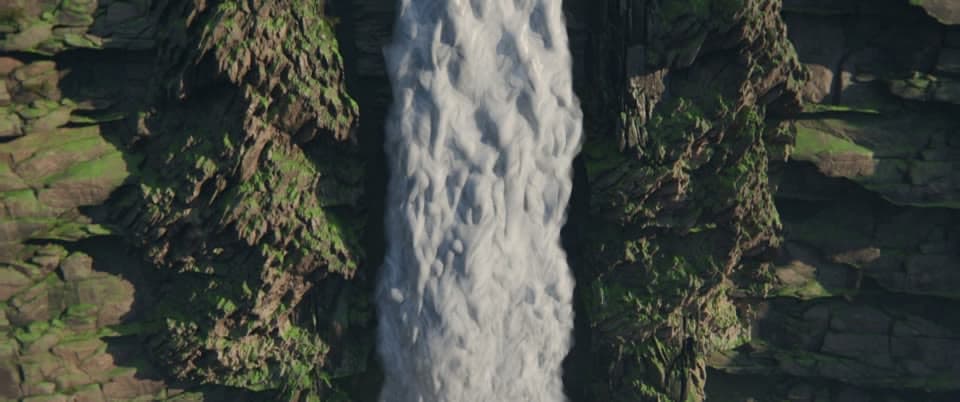 Draft 5Final
The great fall, from the new head-on camera.
The film
- Direction and prompts
- Aman Singh
- Layout, terrain, cliff band and lake; the palace's mass and roofs; the marble hall; sky, sun and camera; the lens pass and every render
- Opus 5.5 (Anthropic), in Claude Code
- Skyline, facade, cliffs, clouds, the waterfall, the throne and the later garden passes
- gpt-6.1-sol (OpenAI), in Codex, 14 sessions
- The first two garden passes: the staircase, gate, parterres and fountains
- gpt-6-astra (OpenAI), in Codex, 2 sessions
- Renderer
- Blender 5.2 and Cycles, on a MacBook
- Length
- 27 seconds, 648 frames
- Music
- “Titan” by Scott Buckley (scottbuckley.com.au), licensed under CC BY 4.0
- Mountains
- Europe terrain data produced using Copernicus data and information funded by the European Union, EU-DEM layers; Mapzen terrain tiles
- Models and textures
- Poly Haven and ambientCG (CC0)
- Statues
- Statens Museum for Kunst plaster-cast scans (public domain)
- Chair, cypresses, urns
- BlenderKit (royalty free); the Baroque chair is by 14DENDIK
What carried over from no. 1
- Drafts from the start.
- Opus 5.5 rendered half-resolution drafts at every step and only ran the full render when I asked for it. No. 1 taught me that the expensive way.
- Codex sessions built more of it.
- Seven modules and 16 sessions, against three modules for the castle. Every module has the same entry point, and they still couldn't render inside the Codex sandbox, so Opus 5.5 dropped each one in, rendered it and fixed what broke.
- Assets before generating.
- Rocks, plants and textures came from Poly Haven and ambientCG, statues from a museum's scans, the chair, cypresses and urns from BlenderKit. Codex only wrote the pieces no library had.
- Still open.
- The hall's haze crashes the GPU renderer whenever the camera is inside it, so its sun shafts are painted sheets instead of light through haze. And Blender still stops now and then with a GPU fault; running the same command again resumes it.
Where the camera never went
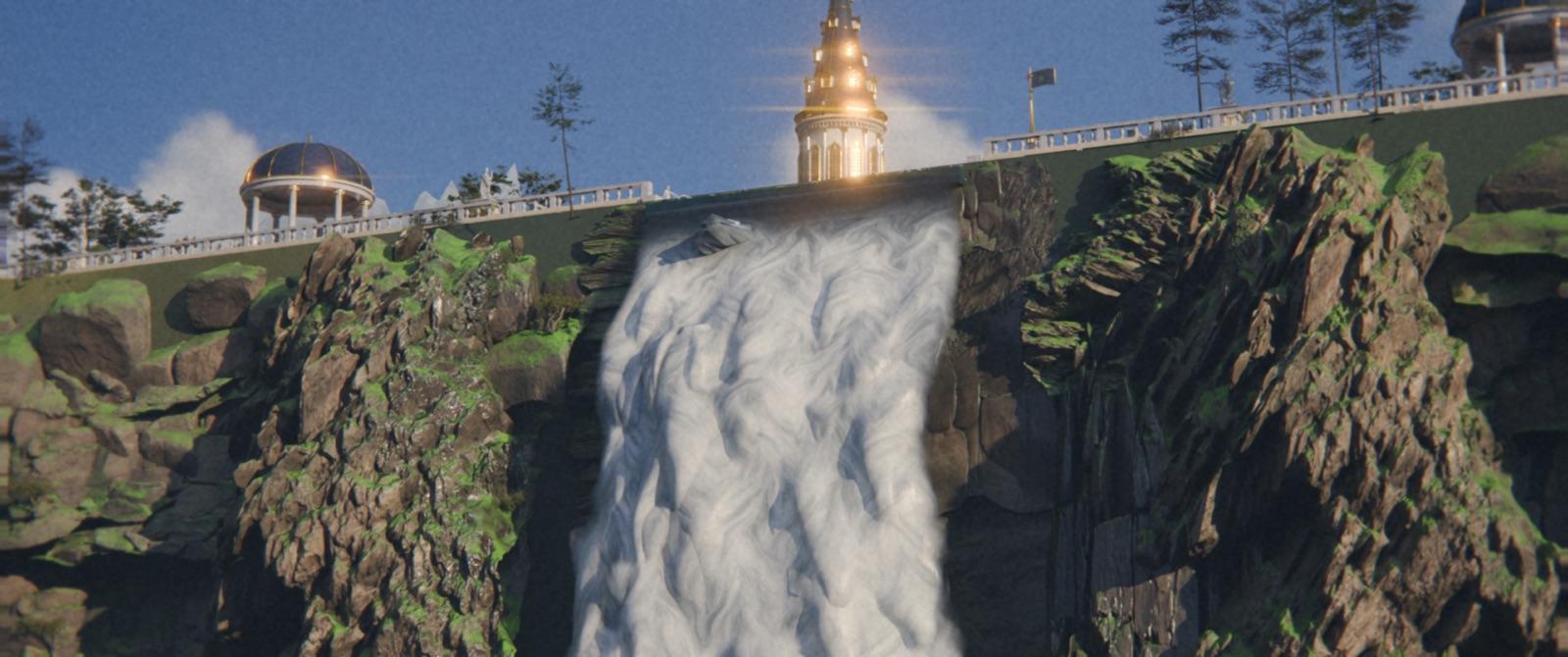
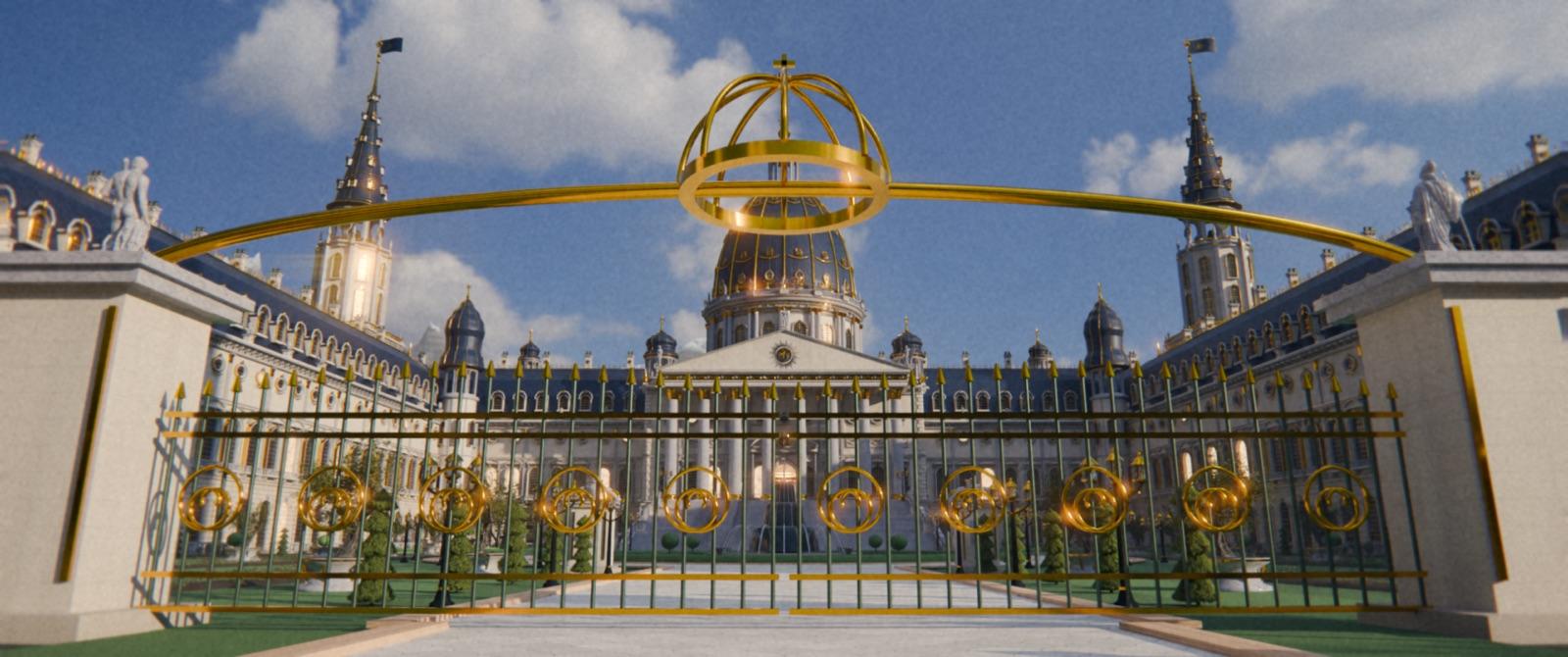
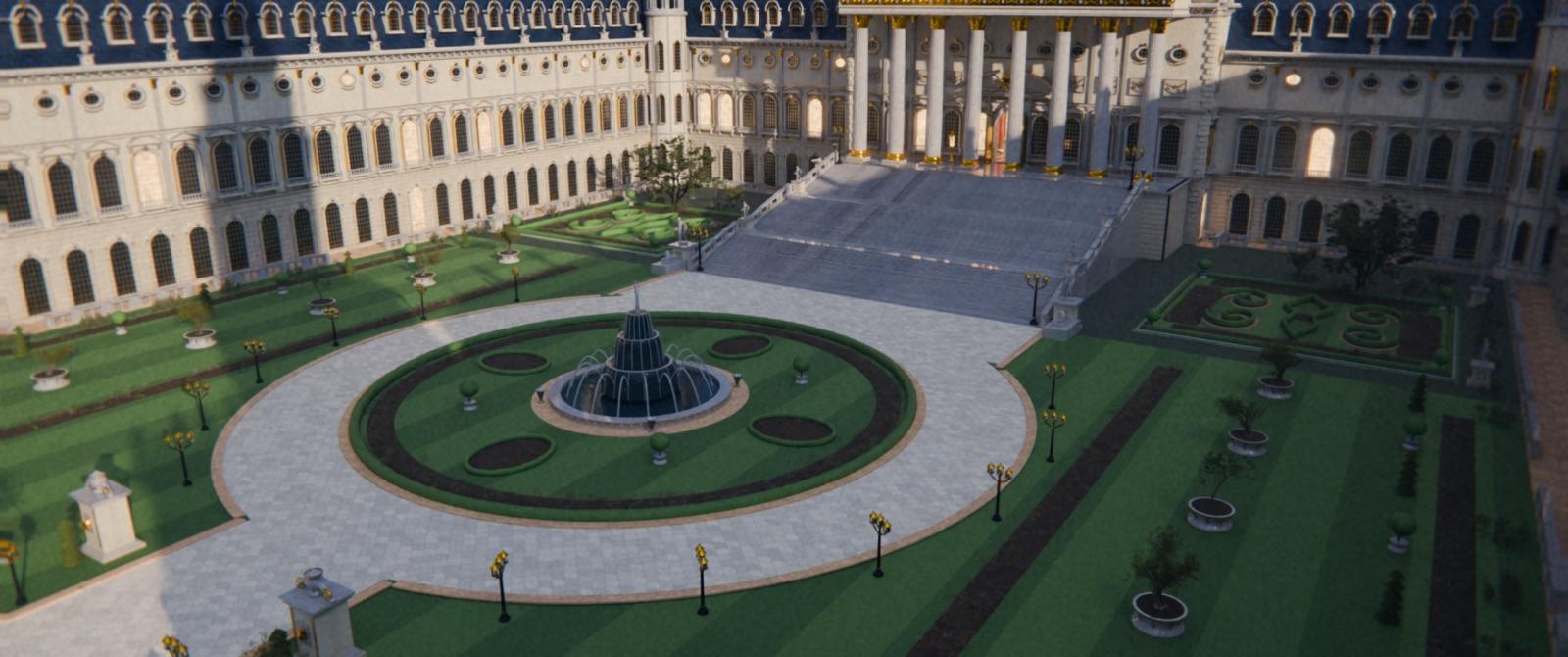
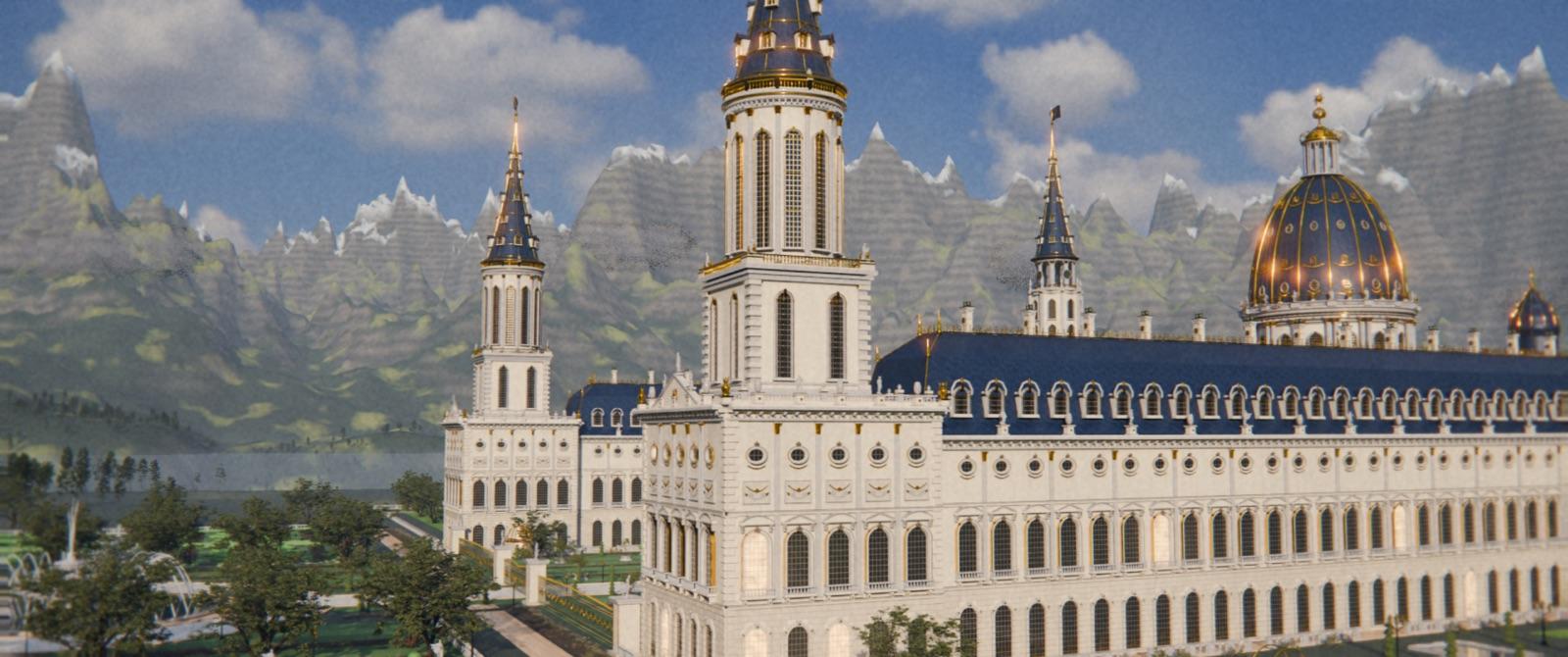
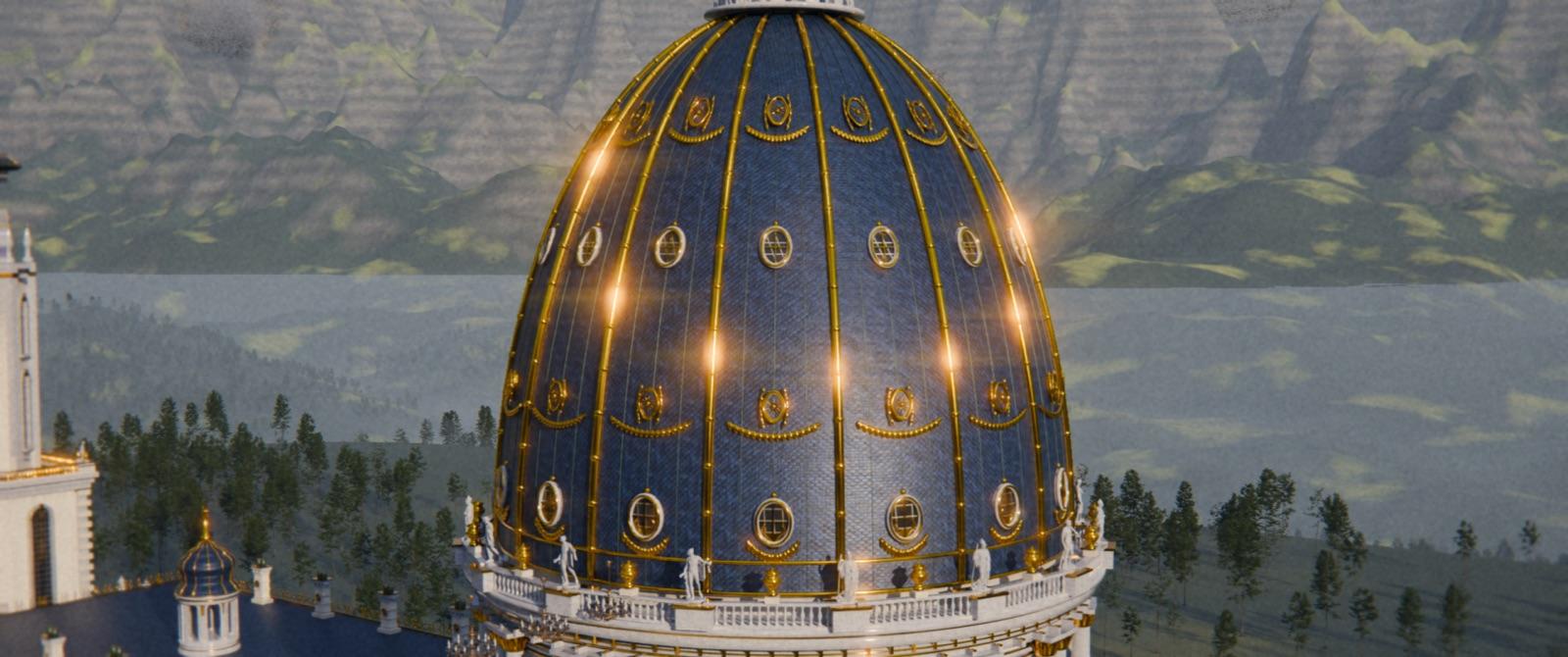
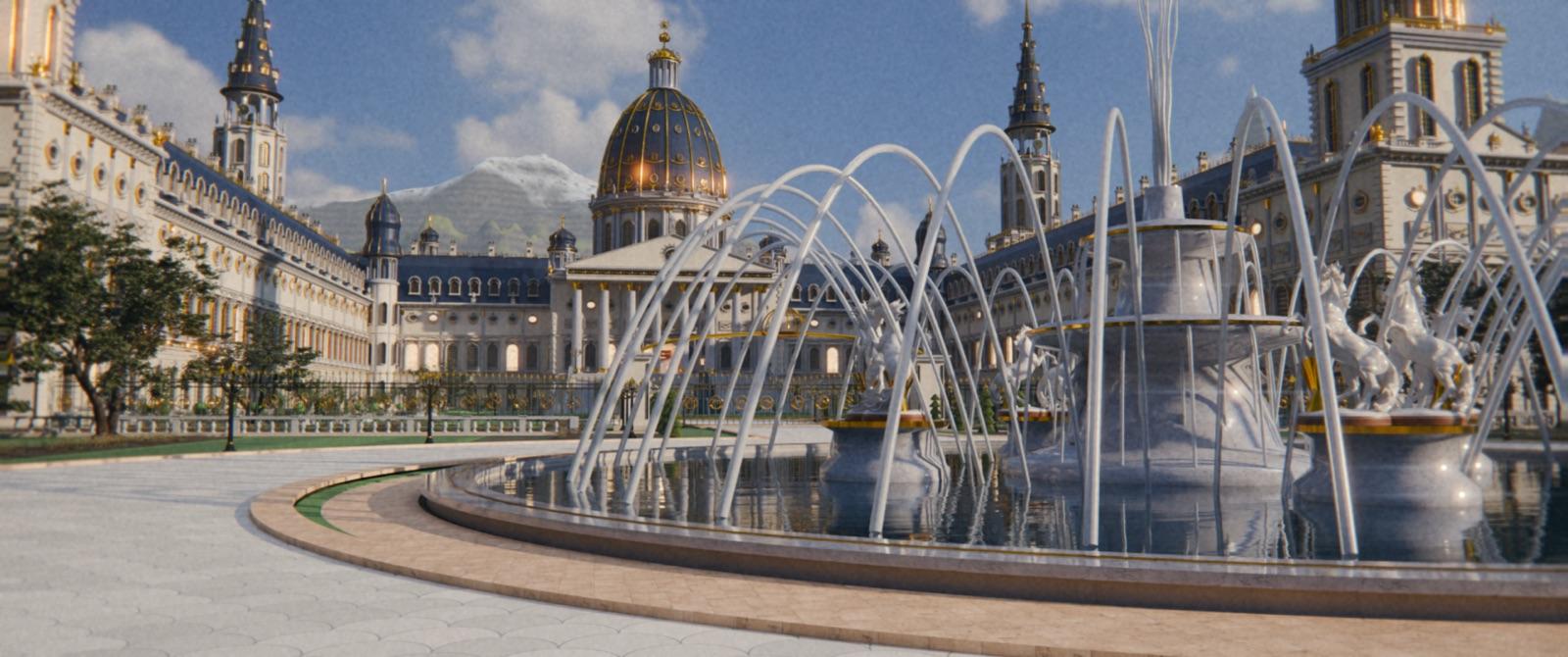
After the film, Opus 5.5 went back into the scene and rendered thirteen shots from places the flight skips, with the same colour grade and lens. Twelve of them are here.
Off the shelf
Every one of these came from an asset library, Poly Haven unless marked. Opus 5.5 rendered each one alone on a grey backdrop, 33 in all; these are twelve of them.
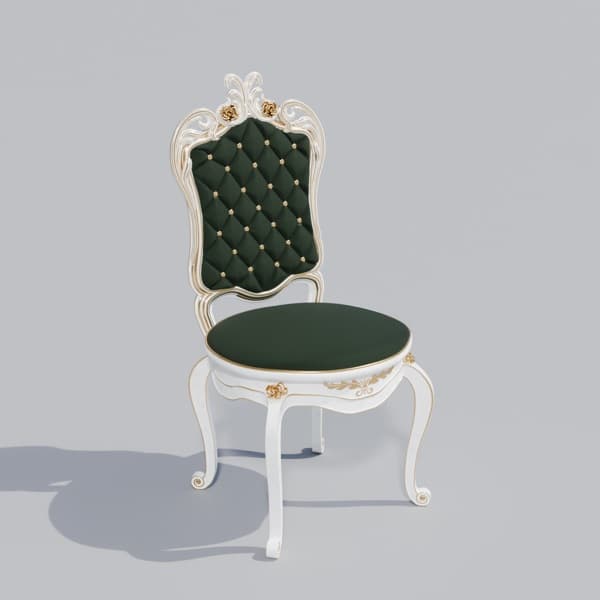
The Baroque chair, before its recolour
BlenderKit, by 14DENDIK
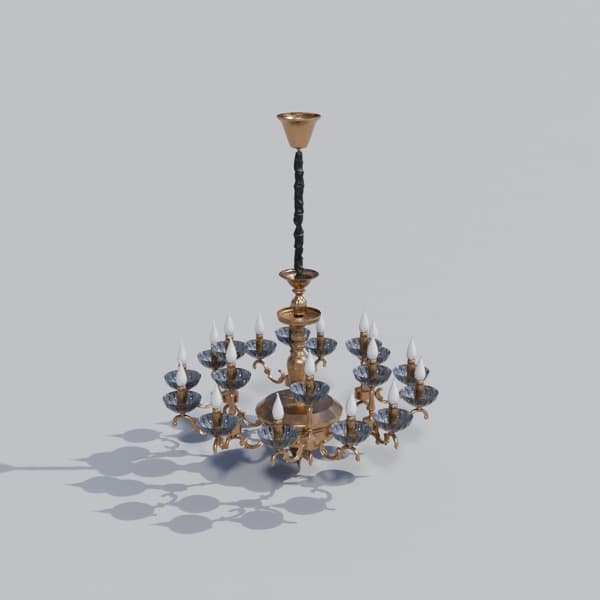
Chandelier
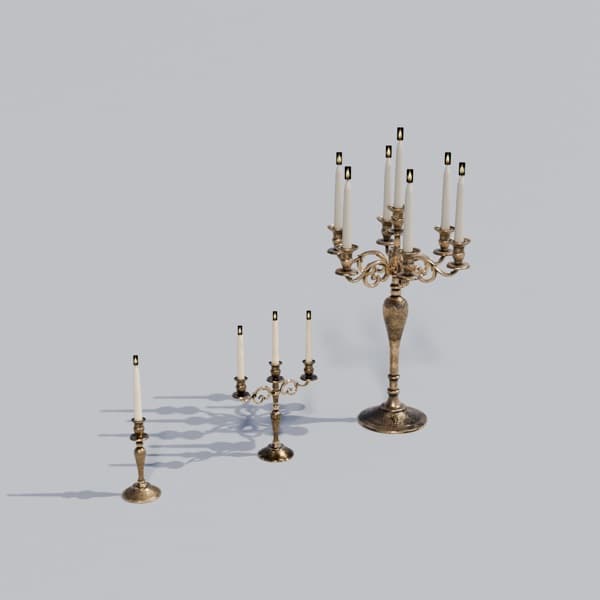
Candleholders
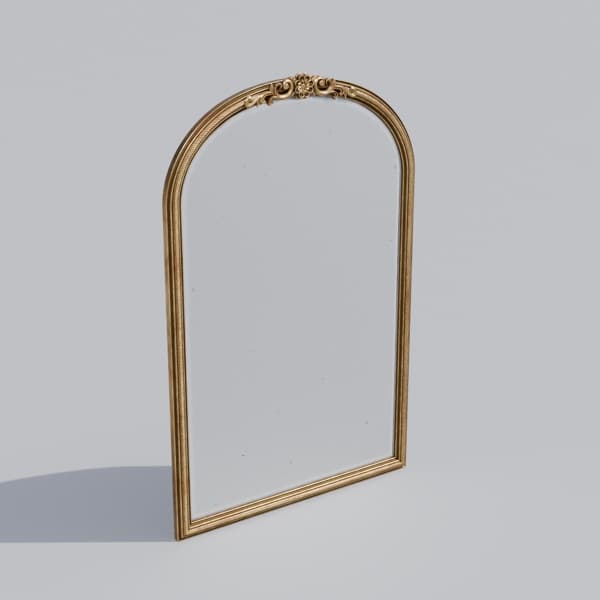
Ornate mirror
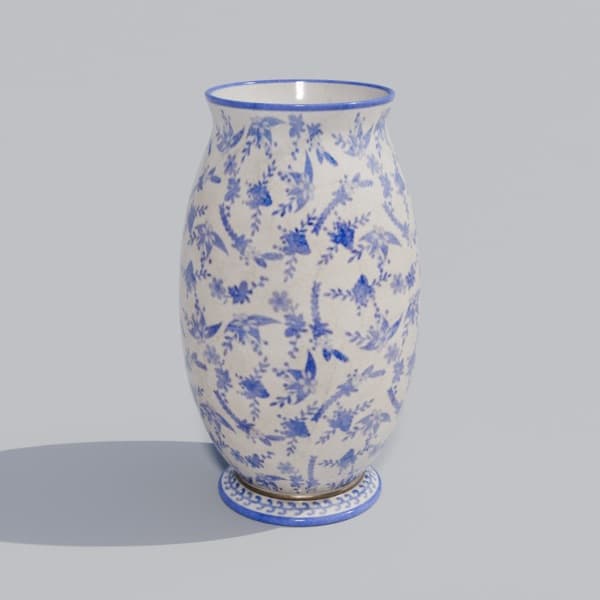
Ceramic vase
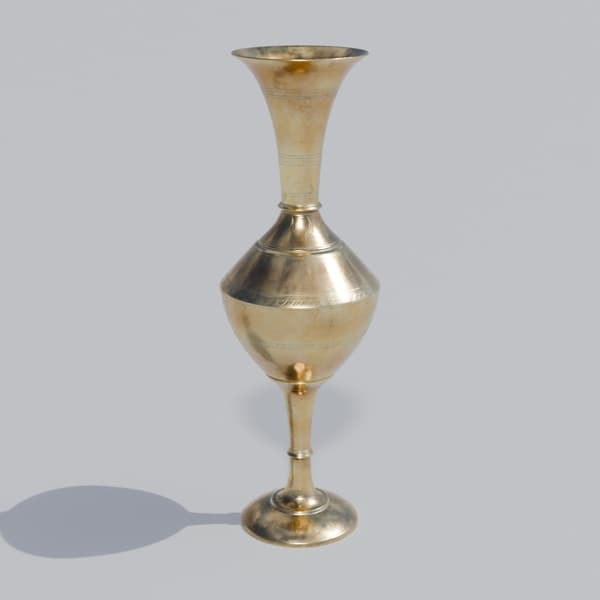
Brass vase
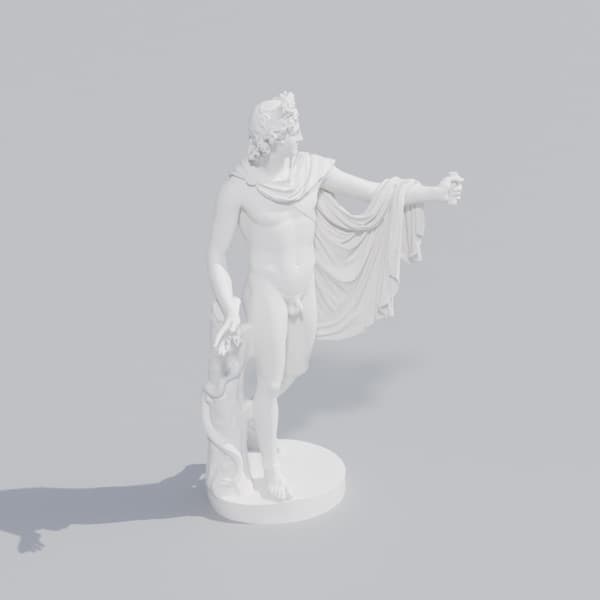
Apollo
SMK scan
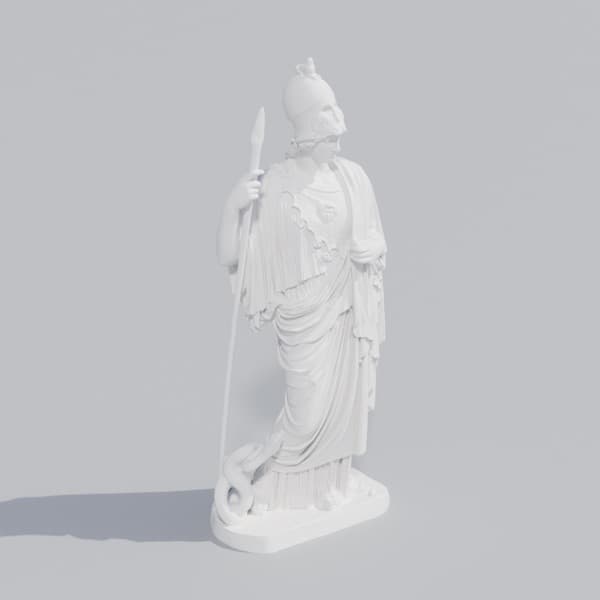
Minerva
SMK scan
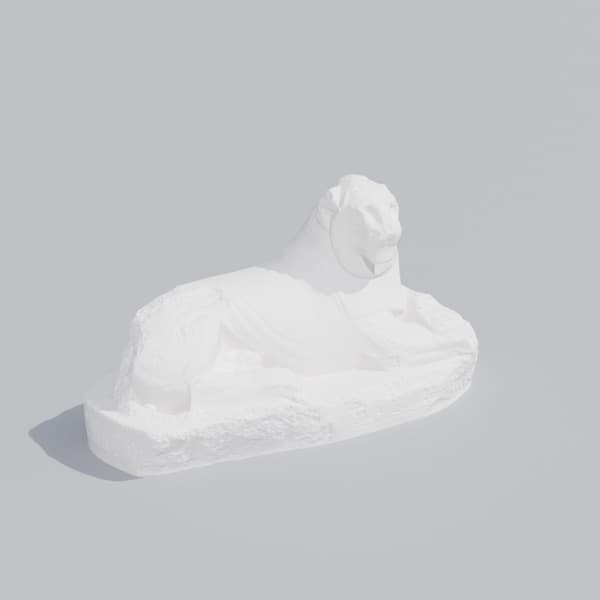
Lion
SMK scan
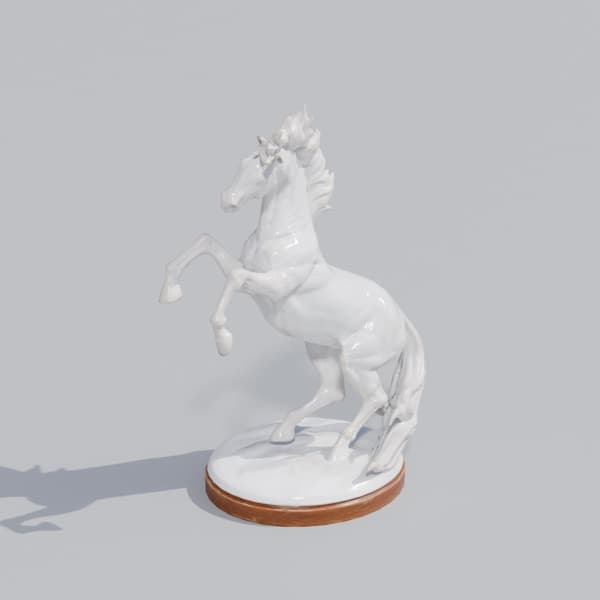
Horse statue
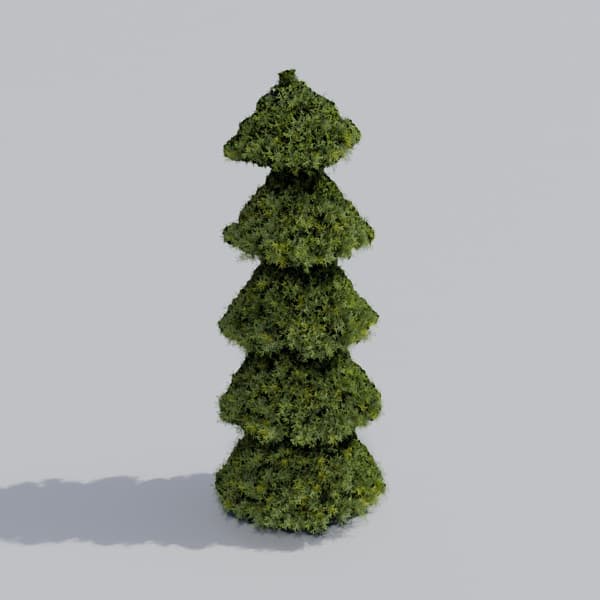
Cypress
BlenderKit
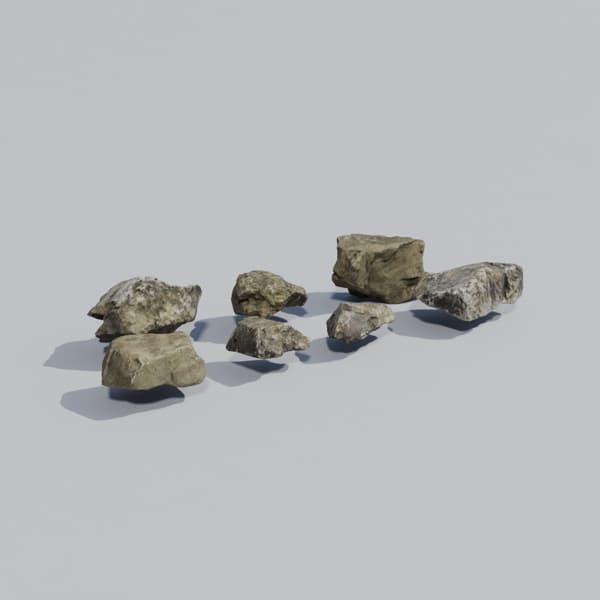
Mossy rocks